From a 1976 biology book to trending TikTok sounds, here is how memes evolved from photocopied office jokes into the internet's shared language.
Every time you send a reaction GIF or type new words over an old template, you are joining a tradition that is older than the internet itself. The word “meme” was born in a 1976 biology book, and the jokes we now pass around in seconds follow patterns that folklorists were documenting on office photocopiers decades before anyone had a smartphone. Here is how we got from a scientist’s thought experiment to your For You page.
In this article
- Where the word “meme” came from
- Before the internet: memes on paper, walls and fax machines
- 1980s–1990s: emoticons, Usenet and the first viral oddities
- 2000s: image macros, forums and the rise of the remix
- 2010s: social feeds turn memes into a shared language
- 2016–today: short video, sounds and the meme as a format
- The history of memes at a glance
- What makes a meme spread?
- Why memes matter: digital folklore
- Frequently asked questions
Key takeaways
- Richard Dawkins coined “meme” in The Selfish Gene (1976) to describe ideas that copy themselves from mind to mind.
- Long before the web, people shared photocopied cartoons, chain letters and graffiti that behaved exactly like memes.
- Each new platform changed the format: emoticons on bulletin boards, image macros on forums, reaction GIFs on social feeds, and remixable sounds on short-video apps.
- Researcher Limor Shifman (2014) reframed internet memes as groups of related items that people knowingly imitate and transform, not single viral posts.
- The core recipe has stayed stable: a recognizable template, an easy way to remix it, and a feeling of being “in on the joke.”
Where the word “meme” came from
In 1976, evolutionary biologist Richard Dawkins published The Selfish Gene, a book about how genes, not individual animals, are the real units of natural selection. In its final chapter he asked a provocative question: could culture have its own replicators, too? He needed a name for a unit of cultural transmission, so he took the Greek root mimeme (“something imitated”) and shortened it to rhyme with “gene.” The result was meme.
Dawkins’ examples were deliberately ordinary: tunes, catchphrases, clothing fashions, ideas, and ways of building things. His point was that these units compete for space in human memory. The ones that are easy to copy, easy to remember and rewarding to share survive; the rest fade. He was not thinking about cat pictures, but he had described the engine of internet humor almost perfectly.
Over the next two decades, the idea grew into a loose academic field sometimes called memetics. Scholars argued about whether memes were a useful scientific concept or just a metaphor. Ordinary people, meanwhile, simply adopted the word once the internet gave it something obvious to point at.
Before the internet: memes on paper, walls and fax machines
It is tempting to think memes began with the web, but the behavior is ancient. Consider a few pre-digital examples:
- “Kilroy was here.” During World War II, a doodle of a bald figure peeking over a wall, paired with that phrase, appeared wherever soldiers traveled. Nobody owned it, everyone copied it, and the joke was in finding it somewhere unexpected.
- Chain letters. Letters promising luck if you copied them (and misfortune if you didn’t) are textbook self-replicating ideas: the message itself contains the instruction to spread.
- Photocopy lore. In 1975, folklorists Alan Dundes and Carl R. Pagter published Urban Folklore from the Paperwork Empire, a collection of the cartoons, mock memos and joke “office rules” that workers passed around on copiers and later fax machines. Many were copied so often that they got blurrier with each generation—an analog version of today’s “deep-fried” meme.
These examples share the traits we still see online: anonymous authorship, endless small variations, and a sense of belonging for the people who recognize them. The internet did not invent memes. It removed the friction.
Folklorists sometimes call this kind of material “xeroxlore.” If you have ever seen a printed “You Want It WHEN?” sign taped above a desk, you have met a meme that predates the World Wide Web.
1980s–1990s: emoticons, Usenet and the first viral oddities
The smiley that started it
On September 19, 1982, computer scientist Scott Fahlman suggested on a Carnegie Mellon University online bulletin board that people mark jokes with 🙂 so readers would know not to take them seriously. It is one of the earliest documented examples of an online convention spreading purely because people found it useful and copied it. The sideways smiley eventually inspired emoji, which took off on Japanese mobile phones in the late 1990s and later joined the Unicode standard.
Usenet and “laws” of the internet
Usenet newsgroups, launched in 1980, were where early online communities developed shared in-jokes, acronyms and running gags. In 1990, attorney Mike Godwin introduced what became known as Godwin’s law, a tongue-in-cheek observation about how long online arguments tend to run before someone makes an extreme historical comparison. He spread it on purpose, as an experiment in whether a deliberate meme could change behavior. It caught on.
Forwarded to everyone you know
As home internet arrived in the mid-1990s, email forwards became the main delivery system. The Dancing Baby, a 3D animation of a diapered infant doing a cha-cha, spread through inboxes around 1996 and eventually appeared on network television. Looping animated GIFs (the GIF format itself dates to 1987) and bizarre fan pages full of dancing cartoon animals rounded out the era. Around 2001, a badly translated line from the 1989 video game Zero Wing—”All your base are belong to us”—became one of the first memes people actively remixed, pasting it into photos of signs, billboards and landmarks.
That shift from forwarding to remixing is the moment internet memes started to look like what we know today.
2000s: image macros, forums and the rise of the remix
The 2000s gave memes their most recognizable visual grammar: the image macro. Take a photo, add bold white text with a black outline (usually the Impact typeface) at the top and bottom, and you have a joke anyone can edit. The format was popular because it was cheap to make and instantly readable at thumbnail size.
Several forces collided in this decade:
- Anonymous forums such as 4chan (founded 2003) churned through jokes at enormous speed. A weekly tradition of posting cat photos on Saturdays helped launch LOLcats, captioned cats speaking in deliberately broken “lolspeak.”
- Dedicated humor sites turned forum jokes into mainstream entertainment. I Can Has Cheezburger? launched in 2007 and brought LOLcats to office workers and grandparents alike.
- YouTube (2005) made video memes possible. In 2007, “rickrolling”—tricking someone into clicking a link that turns out to be a 1980s pop music video—became the internet’s favorite bait-and-switch prank.
- Rage comics (around 2008) let anyone tell a relatable story using a shared cast of crudely drawn faces, proving that low production quality could be a feature, not a bug.
- Documentation arrived. Know Your Meme launched in 2008 to research and catalog meme origins, a sign that memes had become a culture worth studying.
By the end of the decade, the defining idea was clear: a meme was no longer a single funny file. It was a template plus a community willing to keep filling it in.
2010s: social feeds turn memes into a shared language
When Facebook, Twitter, Reddit, Tumblr and Instagram became daily habits, memes moved from niche corners to the center of online life. A few patterns defined the decade.
Advice animals and reusable formats
“Advice animal” image macros paired a stock character (a smug animal, an awkward penguin) with a predictable two-line structure. Because the character told you the joke’s angle before you read a word, these formats were fast to understand and endlessly reusable—a pattern later formats such as the multi-panel “expanding brain” and labeled stock photos would follow.
Challenges and participation memes
Some memes were things you did, not things you posted. Planking (lying face-down in odd places) peaked around 2011. The Harlem Shake video craze of early 2013 had a strict structure: one person dancing alone, a sudden cut, then the whole room going wild. In 2014, the Ice Bucket Challenge showed memes could raise real money and awareness for a cause, in that case ALS research. The 2016 Mannequin Challenge had entire classrooms and sports teams freezing in place.
Six seconds of genius
Vine, which ran from 2013 to 2017, limited videos to six looping seconds. That constraint produced a generation of creators who learned to land a joke instantly, and many Vine catchphrases are still quoted today. Its shutdown left a gap that short-video apps would soon fill.
Doge and the art of weird
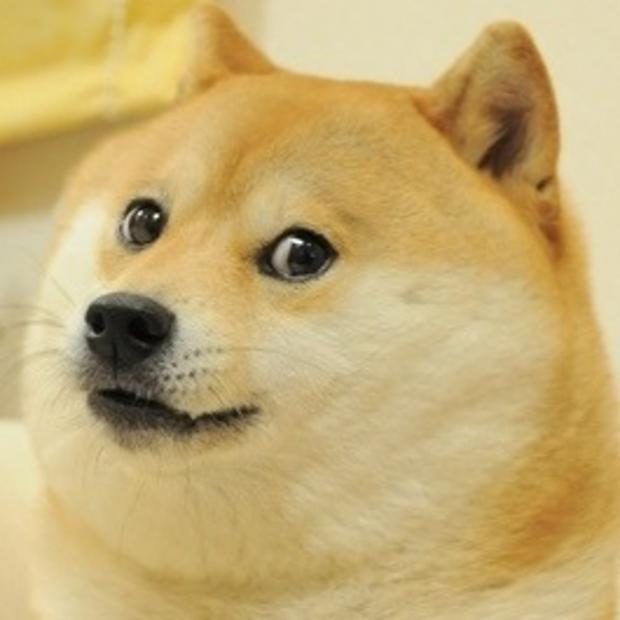
Around 2013, photos of a Shiba Inu surrounded by colorful Comic Sans phrases (“such wow”) showed how far memes had drifted from traditional joke structure. The humor lived in tone and texture rather than a punchline. Ironic, surreal and absurdist memes became a major branch of internet comedy.
2016–today: short video, sounds and the meme as a format
The arrival of TikTok internationally in 2017 (merging with the lip-sync app Musical.ly in 2018) changed the basic unit of a meme again. Instead of a picture or a phrase, the template became a sound: a snippet of audio that thousands of people reuse with their own visuals, timing and twist. Instagram Reels and YouTube Shorts adopted the same mechanics.
Three things make this era distinct:
- Algorithmic discovery. You no longer need followers to go viral; recommendation feeds can push a stranger’s remix to millions of people.
- Faster life cycles. A format can appear, peak and feel dated within days. Being “late” to a meme is itself a running joke.
- Memes everywhere. Brands, museums, schools and public agencies now speak meme fluently, with mixed results. When an organization uses a format well, it signals that it understands its audience; when it misfires, that becomes a meme, too.
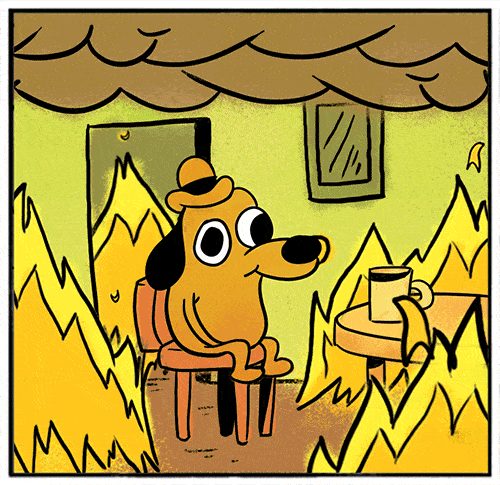
Reaction GIFs, sticker packs and emoji also mean that memes now function as vocabulary. Sending the right image can say “same,” “I’m shocked,” or “this is fine” more precisely than a sentence.
The history of memes at a glance
| Era | Typical formats | How they spread | What changed |
|---|---|---|---|
| Pre-1980s | Graffiti, chain letters, photocopied cartoons | Hand to hand, mail, office copiers | Anonymous, endlessly varied folk humor |
| 1980s–1990s | Emoticons, Usenet in-jokes, animated GIFs | Bulletin boards, newsgroups, email forwards | Online communities develop shared conventions |
| 2000s | Image macros, LOLcats, rickrolls, rage comics | Forums, humor sites, early YouTube | Remixing replaces forwarding; templates emerge |
| 2010s | Advice animals, challenges, Vines, reaction GIFs | Social feeds, Reddit, Tumblr, Vine | Memes go mainstream and become participatory |
| 2016–today | Trending sounds, duets, stitched videos, stickers | TikTok, Reels, Shorts, group chats | Algorithms drive reach; formats live and die fast |
What makes a meme spread?
Dawkins described three properties that help any replicator succeed: fidelity (it copies accurately), fecundity (it copies often) and longevity (it lasts). Internet memes add a twist, because they succeed partly by being changed. In her 2014 book Memes in Digital Culture, communication scholar Limor Shifman argued that an internet meme is best understood as a group of items that share content, form or attitude, created with awareness of one another and spread and transformed by many users. In other words, a single viral video is not a meme; the hundreds of parodies it inspires are.
Looking across four decades, the most successful memes tend to share these traits:
- A clear, fixed structure with an obvious “slot” for new content.
- Low effort to remix—a few words, a new photo, a ten-second clip.
- Relatability: a feeling or situation lots of people recognize.
- Insider pleasure: understanding the reference makes you part of a group.
- Emotional payoff: surprise, delight, or a laugh of recognition.
Want to try the recipe yourself? Our free online meme maker lets you upload a photo or pick a template, add top and bottom text, and download a PNG. For strategy, read our step-by-step guide on how to make a meme people actually share.
Why memes matter: digital folklore
It is easy to dismiss memes as disposable, but they do serious cultural work. They let people process big events together, poke gentle fun at everyday frustrations, and signal belonging to a community, whether that is fellow teachers, gardeners or fans of a particular show. Many folklorists now treat memes as the modern equivalent of jokes, proverbs and rhymes that once passed by word of mouth.
Memes also raise real questions about credit and ownership. Many start with a photo or clip someone else created, and some feature ordinary people who never asked to become famous. Sharing responsibly means thinking about the person in the picture and the creator behind it. Our guide to meme etiquette and copyright covers the basics, including how US fair use (explained by the US Copyright Office) is weighed case by case.
And memes have jumped back off the screen. Families play caption games at birthday parties, offices run meme contests, and friends shout out formats during game night. Our Meme Bingo Party Kit brings that energy to the table, no Wi-Fi required.
Frequently asked questions
Who invented the word “meme”?
Evolutionary biologist Richard Dawkins coined the word in his 1976 book The Selfish Gene. He shortened the Greek-derived “mimeme” so it would rhyme with “gene” and used it to describe units of culture, such as tunes and catchphrases, that spread by imitation.
What was the first internet meme?
There is no single agreed answer. Early candidates include the 🙂 emoticon proposed in 1982, in-jokes and “laws” from Usenet newsgroups, and the Dancing Baby animation that spread by email around 1996. Most historians point to the late 1990s and early 2000s as the time when remixable memes clearly emerged.
What is the difference between a viral post and a meme?
A viral post is one item seen by many people. A meme is a family of items that people copy and change, such as hundreds of remixes using the same image or sound. Scholar Limor Shifman’s 2014 work popularized this distinction.
Why do memes use the Impact font?
Impact’s thick, condensed letters stay readable when placed over busy photos, especially with a white fill and black outline. It was also widely installed on computers, which made it the default choice for early image macro generators.
Are memes going away?
The formats keep changing, but the behavior is very old. People shared folk humor long before the internet, so memes are likely to keep evolving with each new platform rather than disappearing.
Memes are proof that people everywhere love to laugh together, borrow a good idea and make it their own. Ready to add your chapter to the story? Fire up the Grin & Print meme maker, make something that would make your group chat grin, and share it kindly.
digital folkloreinternet cultureinternet memesmeme historyviral humor
Grin & Print Editorial Team
We write clean, kind, genuinely useful humor guides and test every printable at our own parties. Read our editorial guidelines.