
How to use jokes and memes at work so they build trust instead of tension: the research, a simple three-audience test, chat etiquette and ready-made team rituals.
The right joke at work can turn a tense Monday stand-up into the meeting everyone actually remembers. The wrong one can follow you into an HR inbox. This guide shows you how to tell the difference, using what humor research says about why laughter bonds people, plus practical rules, ready-to-use rituals and clean office jokes you can borrow today.
In this article
- Why humor belongs at work at all
- The four humor styles, and which ones help teams
- Why the same joke works for one person and hurts another
- The three-audience test
- Green, yellow and red topics
- Memes at work: Slack and Teams etiquette
- Humor tips by role
- Ready-made humor rituals for teams
- When a joke lands wrong: a simple repair script
- Frequently asked questions
Key takeaways
- Laughter is mostly social glue, not joke-telling: shared, inclusive humor helps teams relax and trust each other.
- Favor affiliative and gently self-deprecating humor; avoid humor that has a target, especially one with less power than you.
- Run every joke through the three-audience test: the person it is about, the newest hire, and a screenshot in the all-company channel.
- Memes in Slack or Teams need channel norms: the right place, the right moment, and alt text so everyone gets the joke.
- If a joke lands badly, repair it quickly and simply. A short, sincere apology beats an explanation of why it was “just a joke.”
Why humor belongs at work at all
It is tempting to treat humor as a nice-to-have: something for the holiday party, not the quarterly review. But the research on laughter suggests it does real social work, and that is exactly what teams run on.
Psychologist Robert Provine, who spent years observing people laughing in everyday settings, found that laughter is overwhelmingly a social behavior. People laugh far more often when they are with others than when they are alone, and much of that laughter follows perfectly ordinary remarks rather than polished punchlines. In other words, laughter is less about comedy and more about signaling “we’re on the same side.”
Work led by evolutionary psychologist Robin Dunbar adds a physical angle: in experiments published in 2012, people who laughed together in groups showed higher pain thresholds afterward, a result the researchers interpreted as consistent with endorphin release. Dunbar has argued that laughter works as a kind of long-distance grooming, a way to bond with several people at once. For a team that spends most of its time in meetings and message threads, that is a useful tool.
If you want the deeper dive, our article on the science of laughter unpacks these studies in more detail. For now, the practical point is simple: shared laughter lowers the temperature, makes it easier to raise problems, and helps people feel they belong. The catch is the word “shared.”
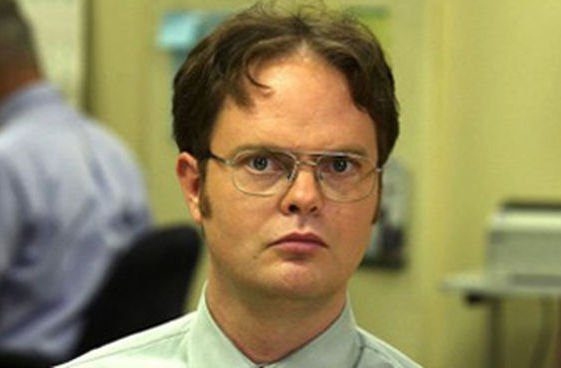
The four humor styles, and which ones help teams
In 2003, psychologist Rod Martin and colleagues published the Humor Styles Questionnaire, which sorts everyday humor into four broad styles. It is one of the most widely used frameworks in humor research, and it maps neatly onto office life.
| Humor style | What it looks like at work | Effect on the team |
|---|---|---|
| Affiliative | Shared jokes about situations everyone is in: the coffee machine, the never-ending reply-all thread, the Wi-Fi in conference room B. | Builds connection. Nobody is the target, so everyone can join in. |
| Self-enhancing | Finding the funny side of stress: “Good news, the deadline is still Friday. Bad news, it’s this Friday.” | Helps people cope and keeps perspective during crunch time. |
| Aggressive | Teasing, sarcasm aimed at a person, “roasting” a colleague in public, jokes about groups. | Gets laughs from some and quietly erodes trust with others. High risk. |
| Self-defeating | Constant put-downs of yourself to get a laugh: “I’m useless, don’t listen to me.” | Can feel relatable in small doses, but repeated it signals low confidence and makes others uncomfortable. |
The pattern is clear: the first two styles connect people, while the last two either push someone down or push yourself down. A light, occasional self-deprecating line (“I’ve clearly mastered the art of muting myself at the exact wrong moment”) is fine. A running bit about how bad you are at your job is not.
Why the same joke works for one person and hurts another
Peter McGraw and Caleb Warren’s benign violation theory (2010) offers a useful lens. Their idea is that we find something funny when it is a violation, meaning something is a little wrong, unexpected or threatening, and at the same time benign, meaning safe, acceptable or distant enough not to matter.
That explains most workplace humor failures. A joke about a missed deadline is benign to the person who hit theirs and a genuine violation to the person who is about to be put on a performance plan. A pun about someone’s accent is benign to the speaker and anything but to the listener. Benign is not a property of the joke; it is a property of the audience. And at work, you rarely know your whole audience.
Power changes the math. When a manager makes a joke, people laugh partly because the manager made it. That laughter is not reliable feedback. The more senior you are, the safer your jokes should be, and the more often the punchline should be yourself, the process or the situation, never someone who reports to you.
The three-audience test
Before you post a meme, send a GIF or tell a joke in a meeting, ask whether it would still be fine in front of three audiences:
- The person (or group) it is about. If the joke has a target, imagine that person reading it with no context and no tone of voice. If you would hesitate, delete it.
- The newest hire. Inside jokes are great for long-standing teams, but a wall of references nobody explains can make a new colleague feel like an outsider. Good humor invites people in.
- A screenshot in the all-company channel. Messages get forwarded, and context gets lost. If the joke only works with your exact tone and your exact relationship, it may not belong in writing.
A joke that passes all three is almost always safe. A joke that fails even one is usually not worth the risk, no matter how funny it seems at 4:45 on a Friday.
Green, yellow and red topics
Topic choice does most of the work. Here is a practical traffic-light guide that suits most offices, remote teams and volunteer groups.
| Light | Topics | Why |
|---|---|---|
| Green | Puns and wordplay, office equipment, meetings and calendars, coffee, weather, commutes, pets, universal tech fails, your own small mishaps | Shared experiences with no victim. Everyone can laugh and anyone can contribute. |
| Yellow | Industry in-jokes, light teasing among close peers, sports rivalries, company leadership decisions, food preferences | Fine with the right people and tone, but easy to misjudge. Keep it brief and read the room. |
| Red | Race, ethnicity, religion, gender, sexuality, age, disability, appearance, accents, politics, someone’s salary or performance, anything romantic or suggestive | These touch on identity and status. Even “harmless” jokes can isolate people and can feed a hostile environment. |
A brief legal note: in the US, the Equal Employment Opportunity Commission explains that petty slights and isolated offhand comments are generally not unlawful on their own, but conduct based on protected characteristics can become unlawful harassment when it is severe or pervasive enough to create a hostile work environment. Jokes are a common ingredient in those situations. Your employer’s policy may also be stricter than the law. This is general information, not legal or HR advice; when in doubt, ask your HR team and skip the joke.
Memes at work: Slack and Teams etiquette

Most office humor now happens in chat, which makes memes and GIFs the new water-cooler jokes. They are fast, visual and easy to share, and they come with their own pitfalls.
Pick the right channel
- Create a dedicated space such as #random, #fun or #pets so people can opt in. Humor is a lot more welcome when it is not interrupting work.
- Keep project and incident channels clean. A reaction GIF in the middle of an outage or a tense client thread reads as “I am not taking this seriously,” even when you mean “hang in there.”
- Use emoji reactions instead of new messages when you just want to show you laughed. It keeps threads readable.
Make it inclusive
- Add alt text or a one-line caption to images so colleagues using screen readers get the joke too.
- Explain references that might not travel, especially on international teams. Puns and idioms often do not translate, and a meme that is everywhere in one country may be unknown in another.
- Avoid flashing or fast-strobing GIFs, which can be a problem for people with photosensitivity.
Mind where the image came from
Sharing a popular meme in an internal chat is everyday behavior. Putting that same image into a customer-facing presentation, a recruiting ad or company social media is different: now it is a commercial use of someone else’s work, and possibly someone’s face. Before a meme leaves the building, read our guide to meme etiquette and copyright, or build your own from scratch with the Grin & Print meme maker using photos your team actually owns.
Humor tips by role
If you lead a team
- Go first and go small. A light, self-directed joke at the start of a meeting gives everyone permission to relax.
- Never joke about performance, pay or job security. Even a playful “careful, or you’re next” lands differently when you control someone’s review.
- Laugh at other people’s jokes, especially quieter teammates’. Being a good audience is the most underrated leadership humor skill.
- Know when to stop. Layoffs, bereavements and serious mistakes are moments for steadiness, not levity.
If you work remotely
- Text strips out tone. Sarcasm that works out loud can read as hostility in a message. When in doubt, choose wordplay over irony.
- Use video icebreakers sparingly: one quick prompt (“show us the weirdest thing on your desk”) beats a forced ten-minute game.
- Time zones matter. A joke thread that explodes while half the team sleeps can feel like a party they missed.
If you are new
- Listen for a few weeks. Every team has its own humor culture. Learn it before you add to it.
- Lead with green-light topics and react generously to other people’s humor. That is how you get invited in.
Ready-made humor rituals for teams
The easiest way to keep workplace humor healthy is to give it a shape. Rituals are predictable, opt-in and inclusive by design. Here are some that work in offices, classrooms and volunteer groups alike.
- Pun of the Day. One person posts a single clean pun each morning. Rotate who posts. Our joke generator has an office category for days when inspiration runs dry, and a dad joke desk calendar on a shared desk does the same job offline.
- Caption Friday. Share one neutral photo (the office plant, a team pet, a strange cloud) and invite captions. Vote with emoji. Because the subject is not a person, nobody becomes the punchline.
- Meme of the Sprint. At a retrospective, each person shares one meme that sums up the last two weeks. It is a surprisingly honest way to surface frustration without blame.
- Joke icebreaker cards. Before a workshop, put a joke card on each seat. People read the question aloud, and the table guesses the answer.
- Office awards with a twist. Light, kind categories such as “Most Creative Use of the Mute Button” or “Best Background Plant.” Keep every award about something the person would happily put on their own profile.
Make it opt-in. The best humor rituals have a low bar for joining and no penalty for sitting out. Not everyone wants to perform, and that is perfectly fine.
Clean office jokes you can borrow
Tap each one to reveal the punchline. They are all built on wordplay and shared experiences, so they pass the three-audience test. If you want to write your own, our guide to the anatomy of a dad joke breaks down the formula.
Why did the scarecrow get promoted?
Because he was outstanding in his field!
Why was the stapler so calm during the reorganization?
It knew how to keep everything together.
Why did the developer’s computer keep sneezing?
It had a bad case of the cache.
What did the calendar say to the deadline?
“Your days are numbered.”
Why did the spreadsheet feel so confident?
It finally had its cells in order.
Why don’t meetings ever get lost?
They always follow the agenda… eventually.
Why did the coffee file a complaint?
It kept getting mugged every morning.

When a joke lands wrong: a simple repair script
Everyone misjudges a room eventually. What matters is the repair, and it is usually much simpler than people fear. Try this four-step approach:
- Acknowledge it quickly. The same day if you can. “Hey, I’ve been thinking about my comment in the meeting.”
- Own the impact, not the intent. “I meant it to be funny, but I can see it came across as dismissive. I’m sorry.”
- Skip the defense. Avoid “it was just a joke” or “you know I didn’t mean it.” Those shift the burden back to the other person.
- Change the behavior. The most convincing apology is simply not making that kind of joke again.
If you are on the receiving end of a joke that bothered you, you can respond in the moment with something neutral (“Hmm, not sure that one works for me”) or follow up privately later. If it is part of a pattern, or it touches on any red-light topic, your manager or HR team is the right next step.

Frequently asked questions
Is humor at work actually good for productivity?
Research on laughter, including Robert Provine’s observational work and Robin Dunbar’s group-laughter experiments, shows that shared laughter is a strong social bonding signal. Teams that feel connected tend to communicate more openly. The benefit comes from inclusive, shared humor; humor with a target tends to do the opposite.
Is it okay for managers to use sarcasm?
Sparingly, and never aimed at a person. Because people tend to laugh at a manager’s jokes regardless of how they feel, sarcasm from a boss is hard to read and easy to resent. Wordplay and gentle self-deprecation are much safer choices for anyone with authority.
Can I share memes in a work chat?
Usually, yes, as long as your team has a channel for it, the meme passes the three-audience test, and you are not dropping it into a serious project or incident thread. Add a short caption or alt text for accessibility. Using memes in external or commercial materials raises separate copyright questions.
What topics should never be joked about at work?
Avoid jokes about race, ethnicity, religion, gender, sexuality, age, disability, appearance, accents, politics, pay or performance, and anything romantic or suggestive. These topics touch on identity and status, and jokes about them can isolate people or contribute to a hostile work environment.
How do I add humor to a team that is not very playful?
Start with a low-pressure, opt-in ritual such as a pun of the day or a caption contest featuring a neutral photo. Go first, keep it short, and celebrate other people’s contributions. Humor cultures grow slowly, and that is fine.
Workplace humor is not about being the funniest person in the room; it is about making the room a little easier to be in. Start with one clean pun, one caption contest or one desk calendar, and see how quickly the mood shifts. Need material? Spin up a fresh office joke with our joke generator and bring it to your next stand-up.
humor stylesmemes at workoffice jokesteam buildingworkplace humor
Grin & Print Editorial Team
We write clean, kind, genuinely useful humor guides and test every printable at our own parties. Read our editorial guidelines.